


Current exhibitions
Gallery 400</a>’s Learning Together centers the progressive art pedagogy of a diverse group of Chicago artist educators from the mid-1960s through the 2010s, highlighting the unique pedagogical practices of educators working across Chicago’s diverse neighborhoods. Artworks co-created by students and educators, sketchbooks, ephemera, and images of public artworks in situ in and around K-12 schools are paired with teaching artists’ artwork inspired by their work with Chicago’s youth.</p><p>Alongside projects emerging from Chicago Public Schools and alternative schools network, Learning Together highlights art education as activism and community-building. Pilsen’s Pros Arts Studio, for example, saw educators organize workshops in city-wide schools, leading initiatives ranging from Día de los Muertos parades to the “Kids on TV” television program, during which students engaged with readings, puppet shows, and spoke about social issues in an innovative live-television format. Other centers of vibrant art-pedagogical innovation presented in the exhibition include the South Side Community Art Center, Little Black Pearl, Gallery 312, and Yollocalli Arts Reach, among many others.</p><p><br></p>" />

Sep 05,2024
- Mar 15,2025
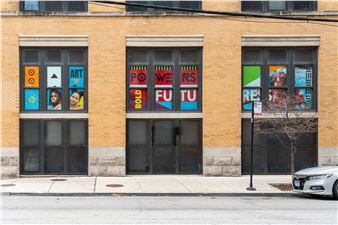
artist Tonika Johnson</a> and muralist Joe “Cujo” Nelson have collaborated on investing in their native Englewood neighborhood. In the South Side, they have transformed a vacant building into an artists’ studio and exhibition storefront, distributed grants to young Black and Brown creatives, beautified public spaces with murals, activated abandoned lots with pop-up art-related events to promote healing, and worked with neighbors on rehabilitating homes with new roofs and building wealth through home equity. Their social actions repair the disinvestments Black communities face.</p><p>On view on <a target="_blank" href=https://www.mutualart.com/Gallery/Gallery-400/"/Organization/Gallery-400/CCCA513521F72661">Gallery 400</a>’s windows on Van Buren Street, Art Powers reflects the role of art education programs such as Gallery 37, an organization that empowered Chicago’s youth in wide-ranging art experiences in tents on a vacant lot in the Loop during the 1990s. Johnson says: “Joe and I had to travel outside our neighborhood for arts programs and high school. We formed a friendship during those commutes that evolved into many creative and community-based collaborations as adults, shaping much of the work we do today. Those experiences highlighted how transformative arts programs were for us, inspiring us to co-found the Englewood Arts Collective with eight other creatives from Englewood. This work embodies the heart of our friendship and our mission with the Englewood Arts Collective: to build spaces where art empowers bold futures. We aim to ensure future generations of young creatives can grow and thrive without having to leave their neighborhoods, like we did.”</p><p><br></p>" />
Nov 08,2024
- Apr 26,2025
Articles

November 20, 2024
Two concurrent shows focused on the radical social and political possibilities of progressive art education in Chicago ask: Who is art really for?

“The Mask of Prosperity” at Gallery 400 presents the work of several artists exploring inheritance.
