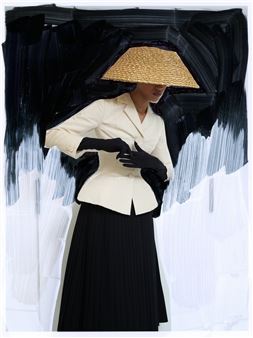
Christian Dior</a> (1905-1957) are all of these. Just after the Second World War, he established his own house in Paris, which soon became famous, and he quickly took the fashion world by storm. His ‘New Look’, with its full skirts, changed fashion, and his silhouettes were worn from Paris to London, New York, Tokyo and Rio de Janeiro. His successors – Yves Saint Laurent, Marc Bohan, Gianfranco Ferré, John Galliano, Raf Simons and Maria Grazia Chiuri – have continuously perpetuated his visionary boldness. Their talent and boundless creativity have left an indelible mark on the unique history of the House of Dior. “The ideas of the founding-couturier are still very much alive”, says curator Madelief Hohé. “His designs will be shown in <a target="_blank" href=https://www.mutualart.com/Organization/Kunstmuseum-Den-Haag/"/Organization/Kunstmuseum-Den-Haag/C159DA730207F71E">Kunstmuseum Den Haag</a> in dialogue with those of Maria Grazia Chiuri, Dior’s current – and first female – Creative Director.”</p><p><br></p>" itemprop="description" />
Kunstmuseum Den Haag</a> which opens on 23 November 2024. With exhibits including recipe books, baking tins, dinner services, paintings and much much more, visitors will be able to dive into the delicious world of desserts. A fun combination of art-historical objects and creative contributions from contemporary makers will make for a show full of surprises. Author and TV personality Janny van der Heijden is the guest curator of Grand Dessert – The History of the Dessert.&nbsp;</p><p>“A dessert is more than just the ultimate ending to a meal”, says Van der Heijden. “It reflects changes in culture, society and tastes down the centuries. You can tell a lot of stories using desserts. Stories about wealth and poverty, about temptation and deception, dominance and oppression, but first and foremost about love of all things sweet.” Along with Suzanne Lambooy, curator at Kunstmuseum Den Haag, she has been working on Grand Dessert – The History of the Dessert, an exhibition that will make your mouth water. “It will be a must-see for fans of art, culture and history, and for everyone with a sweet tooth. So for everyone, in fact, because who doesn’t love a dessert?”</p><p><br></p>" itemprop="description" />
Monet to Morisot, witness how the city, in the midst of the 19th century, evolves into the place we recognize today but never fully grasp. See through the eyes of the Impressionists—Monet, <a target="_blank" href=https://www.mutualart.com/Organization/Kunstmuseum-Den-Haag/"/Artist/Edouard-Manet/BEFBEF0CEAA0C0EB">Manet, <a target="_blank" href=https://www.mutualart.com/Organization/Kunstmuseum-Den-Haag/"/Artist/Pierre-Auguste-Renoir/691CC2F7F69EB433">Renoir, Degas, <a target="_blank" href=https://www.mutualart.com/Organization/Kunstmuseum-Den-Haag/"/Artist/Frederic-Bazille/7371CEC20F1ADA49">Bazille, <a target="_blank" href=https://www.mutualart.com/Organization/Kunstmuseum-Den-Haag/"/Artist/Gustave-Caillebotte/4E6F43E5647CF737">Caillebotte, <a target="_blank" href=https://www.mutualart.com/Organization/Kunstmuseum-Den-Haag/"/Artist/Mary-Cassatt/E4FA27F77ED2BA5F">Cassatt, and Morisot—and let yourself be carried away in Félix Nadar’s hot air balloon. With its radiant splendour and its history of revolt, Paris continues to enchant us.</p><p>Together at last&nbsp;</p><p>In 1867, Claude Monet painted the view of Paris from a balcony at the Louvre. With this work, he literally turned his back on classical art to admire and capture the bustling life in the streets. Monet placed his own world at the forefront. The result was three paintings: "This is my here and now," Monet must have thought. These three cityscapes, reunited through close collaboration with the Alte Nationalgalerie (Berlin) and the Allen Memorial Art Museum (Oberlin, Ohio), will finally be reunited in New Paris: From Monet to Morisot.&nbsp;&nbsp;</p><p>The world is your oyster</p><p>These three masterpieces form the centerpiece of this major Impressionist exhibition, surrounded by a broader narrative: what we cherish about the city and what was collectively swept under the rug. Paris, during these years, is alive, teeming with energy—the world is your oyster. A "livable" city plagued by growing pains, pushing those with the least to its fringes. War and political unrest left lasting scars. Exploitation coexisted with an ever-hopeful gaze toward an uncertain future.&nbsp;&nbsp;</p><p>La Parisienne</p><p>The fashionable Parisienne became the embodiment of this new Paris. Suddenly, there were public spaces like department stores and theaters that offered her newfound freedoms. It was a world of seeing and being seen. Changing times were reflected in fashion, visible in the streetscape. In Paris, the new woman was everywhere—those who wore couture, those who made it, those who depicted it, and those who observed it, stirring reactions in turn. Yet, <a target="_blank" href=https://www.mutualart.com/Organization/Kunstmuseum-Den-Haag/"/Artist/Berthe-Morisot/70D5B514C66AF592">artists like Morisot</a> and Cassatt were still barred from cafés alongside their male colleagues—still a social taboo. While Manet and Renoir often portrayed the Parisienne as a symbol or type of the city, Cassatt and Morisot depicted women as individuals.&nbsp;&nbsp;</p><p>Living, shopping, toiling</p><p>New Paris was built by the grit of hardworking people. Thousands of masons, carpenters, and other laborers drew to the city—but it was a city built for the wealthy. In New Paris: From Monet to Morisot, you’ll not only see the rise of leisure and advertising but also the faces of those overlooked at the time. Those that made everything possible, who never got to taste of its luxury.&nbsp;</p><p>A promising future</p><p>The world was restless. Prussia besieged the French capital, and the beautiful new boulevards, squares, and parks were ravaged. Many lost their lives, and the Tuileries Palace was engulfed in flames. But Monet, standing on that balcony in 1867, could not have known this. He gazed upon the enchanting city and its promising future. For the Impressionists, the time of change was within reach. Bazille was confident about their impact: "You'll see, everyone will be talking about us."</p><p>This exhibition is a treasure trove of paintings, drawings, and photographs, supplemented with posters, letters, and satirical prints to capture Paris in 1867 in full colour. The exhibition is supported by numerous museum and private lenders, with partners including Alte Nationalgalerie (Berlin), Allen Memorial Art Museum (Oberlin), and others such as Musée Carnavalet – Histoire de Paris (Paris), The National Gallery of Art (Washington), The Metropolitan Museum of Art (New York), Musée d’Orsay (Paris), Musée Marmottan Monet (Paris), Museum Barberini (Potsdam), and many other collections.&nbsp;</p><p><br></p>" itemprop="description" />
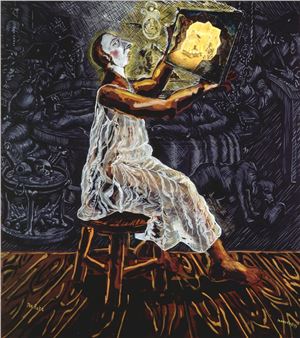
Pinińska-Bereś’s work</a> in the group exhibition Feminist Art International in 1979, and is now presenting this extraordinary artist’s first solo exhibition in the Netherlands. A first for the Dutch public!</p><p><br></p>" itemprop="description" />

Kunstmuseum Den Haag

The Hague | Netherlands

The Kunstmuseum is a modern palace of the arts. Step inside this enchanting building, wander through its beautiful daylit galleries and discover that special work of art that touches you personally. You might even leave a little in love. With that extraordinary painting by Monet, that impressive photography exhibition, the adventurous life of Piet Mondrian, the intimate galleries, or the period rooms full of Delftware. A visit to the Kunstmuseum is always a memorable and meaningful experience.

Current exhibitions

Christian Dior</a> (1905-1957) are all of these. Just after the Second World War, he established his own house in Paris, which soon became famous, and he quickly took the fashion world by storm. His ‘New Look’, with its full skirts, changed fashion, and his silhouettes were worn from Paris to London, New York, Tokyo and Rio de Janeiro. His successors – Yves Saint Laurent, Marc Bohan, Gianfranco Ferré, John Galliano, Raf Simons and Maria Grazia Chiuri – have continuously perpetuated his visionary boldness. Their talent and boundless creativity have left an indelible mark on the unique history of the House of Dior. “The ideas of the founding-couturier are still very much alive”, says curator Madelief Hohé. “His designs will be shown in <a target="_blank" href=https://www.mutualart.com/Organization/Kunstmuseum-Den-Haag/"/Organization/Kunstmuseum-Den-Haag/C159DA730207F71E">Kunstmuseum Den Haag</a> in dialogue with those of Maria Grazia Chiuri, Dior’s current – and first female – Creative Director.”</p><p><br></p>" />
Upcoming exhibitions

Pinińska-Bereś’s work</a> in the group exhibition Feminist Art International in 1979, and is now presenting this extraordinary artist’s first solo exhibition in the Netherlands. A first for the Dutch public!</p><p><br></p>" />
Articles
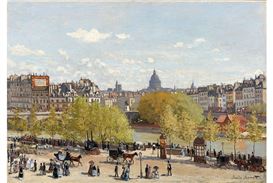
"New Paris: From Monet to Morisot" unveils the city's social upheaval behind the Impressionist brushstrokes
7 Exhibitions to See This Winter

Contact details

Sunday
10:00 AM - 5:00 PM
Tuesday - Saturday
10:00 AM - 5:00 PM
Stadhouderslaan 41 The Hague, Netherlands 2517 HV
Sign in to MutualArt.com