


Kwon Young-Woo: Various Whites
Kukje Gallery is pleased to present Various Whites, the second solo exhibition of one of the leading artists of the Dansaekhwa movement, Kwon Young-Woo. The exhibition will showcase Kwon's masterpieces ranging from his early practice to white hanji (Korean paper) works, providing an invaluable opportunity to understand how Kwon developed a new visual language by employing traditional mediums of oriental painting and combining them with modern techniques and conceptual rigor.
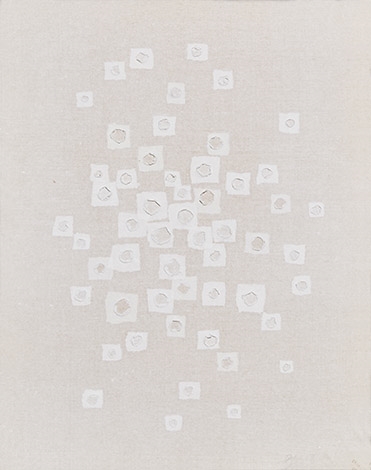
This exhibition derives its title from the historic exhibition Five Korean Artists, Five Kinds of White held at Tokyo Gallery in 1975, considered to be the first exhibition where Dansaekhwa was introduced internationally. As the title of this exhibition indicates, Kwon, whose works were presented in the show, has played an important role in the evolution of Danseakhwa since its onset. Early in his career, the artist was well known for his use of figurative abstraction and Chinese ink, a common oriental medium. It was his background in this traditional idiom that highlighted the decisive break he made in 1962 when he decided to use hanji as his primary medium. Various Whitestraces Kwon’s artistic trajectory, presenting his early oriental painting from the 50s and his hanji works on panel in the early 70s. The works from this mid-career period are notable for the way they investigate different formative aesthetics within their composition, and the context they give to his later white hanji works—produced since the mid-70s. Especially in these white hanji works, Kwon renounced the use of the brush and the traditional emphasis on drawing and painting, and opted to use his hands and handmade tools to cut, tear, puncture, and glue the paper together; in so doing, he put repetitive action and the paper’s materiality and tactility at the forefront of his practice. His focus on the hanji’s delicate layered texture led to three-dimensional shapes and rhythmic compositions that fill the entire surface, and his innovative techniques were praised for reinvigorating themes of oriental painting and creating a new vocabulary, thereby expanding its definition.
Recommended for you

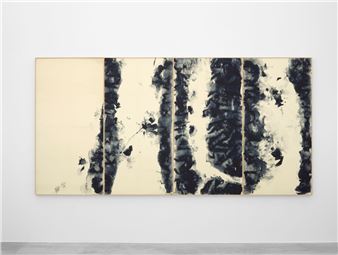
Kukje Gallery is pleased to present Various Whites, the second solo exhibition of one of the leading artists of the Dansaekhwa movement, Kwon Young-Woo. The exhibition will showcase Kwon's masterpieces ranging from his early practice to white hanji (Korean paper) works, providing an invaluable opportunity to understand how Kwon developed a new visual language by employing traditional mediums of oriental painting and combining them with modern techniques and conceptual rigor.
This exhibition derives its title from the historic exhibition Five Korean Artists, Five Kinds of White held at Tokyo Gallery in 1975, considered to be the first exhibition where Dansaekhwa was introduced internationally. As the title of this exhibition indicates, Kwon, whose works were presented in the show, has played an important role in the evolution of Danseakhwa since its onset. Early in his career, the artist was well known for his use of figurative abstraction and Chinese ink, a common oriental medium. It was his background in this traditional idiom that highlighted the decisive break he made in 1962 when he decided to use hanji as his primary medium. Various Whitestraces Kwon’s artistic trajectory, presenting his early oriental painting from the 50s and his hanji works on panel in the early 70s. The works from this mid-career period are notable for the way they investigate different formative aesthetics within their composition, and the context they give to his later white hanji works—produced since the mid-70s. Especially in these white hanji works, Kwon renounced the use of the brush and the traditional emphasis on drawing and painting, and opted to use his hands and handmade tools to cut, tear, puncture, and glue the paper together; in so doing, he put repetitive action and the paper’s materiality and tactility at the forefront of his practice. His focus on the hanji’s delicate layered texture led to three-dimensional shapes and rhythmic compositions that fill the entire surface, and his innovative techniques were praised for reinvigorating themes of oriental painting and creating a new vocabulary, thereby expanding its definition.
Artists on show
Contact details

What's on nearby


