
The “End” of PST ART
The Getty-sponsored PST ART series explored art and science intersections, featuring ecological and historical exhibitions, with key shows extending beyond the official end date
Maya Garabedian / MutualArt
Feb 14, 2025
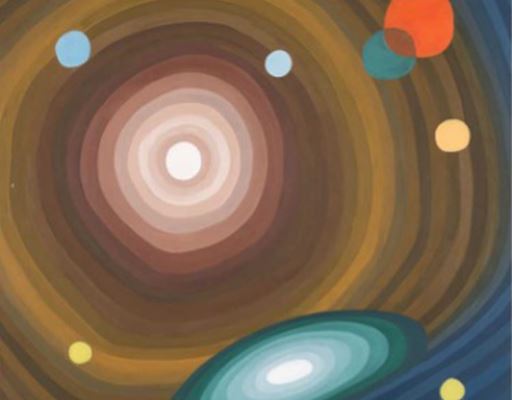
The third iteration of the Getty-sponsored PST ART series highlighted the intersections of art and science, exploring how both fields are addressing the pressing issues of our time with its theme, Art & Science Collide. With more than 70 institutions and 800 artists involved, officially the largest art event in the United States, it would be difficult, if not impossible, to attend every event. That being said, anyone who hasn’t experienced PST ART yet still has some time, despite everyone saying it’s all over this week.
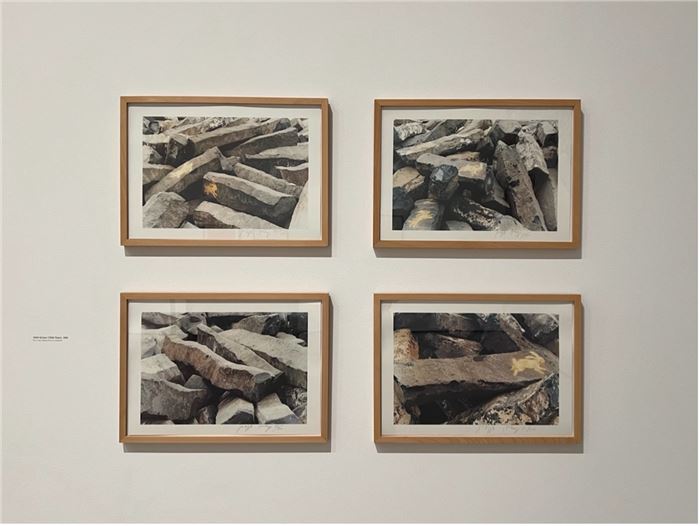 Joseph Beuys, 7000 Eichen (7000 Oaks), 1983, on view at The Broad. Photo by Maya Garabedian
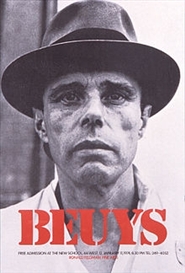
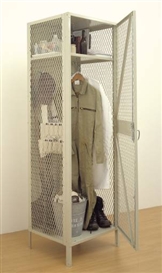
One of the most riveting shows affiliated with PST ART has been Joseph Beuys: In Defense of Nature, which has been on view (with free tickets) at The Broad since November. The part of the show associated with PST ART is an homage to Beuys’s groundbreaking 7000 Oaks piece, entitled Social Forest: Oaks of Tovaangar, taking place off-site at Elysian Park. Beuys’s original reforestation project began in 1982 in Kassel, Germany, where he planted trees accompanied by stones as a symbolic reckoning with the traumas of World War II. Social Forest: Oaks of Tovaangar aims to fill a similar role in Los Angeles, addressing ecological repair and acknowledging the immense hardship the native Tongva people faced at the hands of colonialism, while honoring their resilience as a community. On February 8, the Social Forest project broke ground in the Elysian Park Reservoir area, planting the first five of 100 trees along Grand View Drive, with a local sandstone boulder placed beside it.
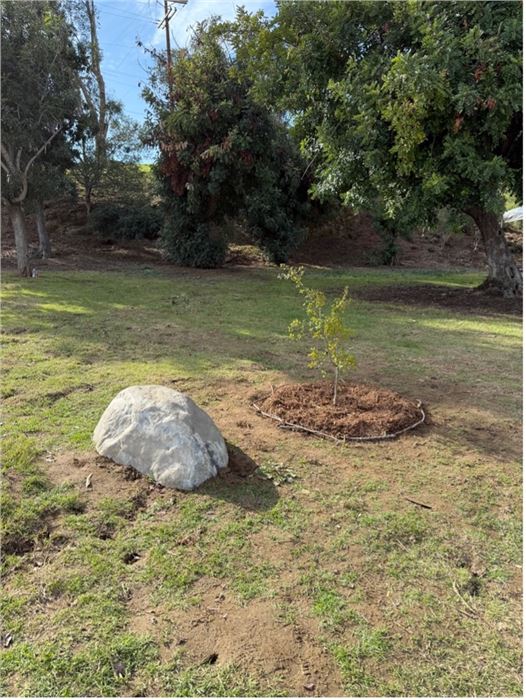
Social Forest: Oaks of Tovaangar. Photo by Maya Garabedian.
The planting event, open to the public, was part of The Broad’s partnership with North East Trees, a community-based non-profit that works on conservation projects throughout the city. With local organizations like North East Trees present at the event, details about the process, beyond what The Broad had shared at their exhibit, emerged, giving this portion of the event life of its own. Not unlike Beuys’s 7000 Oaks, which took five years to complete (1982-87), Social Forest is an ongoing effort. The 100 native California trees will be comprised of 75 Coast Live Oaks and 25 Engelmann Oaks, grown from acorns collected and deemed “viable” after rigorous testing. Each acorn will outgrow a series of pots over the course of five years before being planted in the ground as part of the official project. This display of socially engaged art served as a reminder of the many profound takeaways from the show at The Broad.
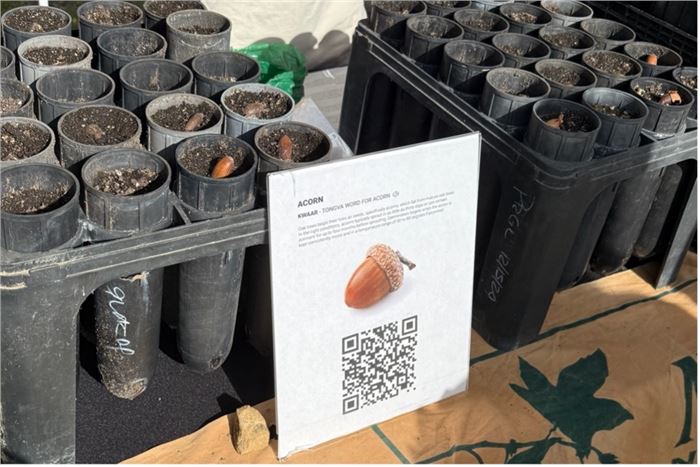 Acorns from North East Trees. Photo by Maya Garabedian.
Joseph Beuys: In Defense of Nature is a must-see for anyone interested in environmental justice, art as a vehicle for sociopolitical change, and multi-genre, interdisciplinary art. Most reports would have you believe that this week is the last opportunity to visit the show: PST ART: Art & Science Collide has been advertised as a five-month event beginning on September 15, 2024, and according to many sources, has an official end date of February 16, 2025. However, the Joseph Beuys retrospective is open until March 23. While I initially chalked up the later end date to a lucky loophole in the programming – technically, The Broad’s collection exhibition isn’t the portion of the two-part event that’s directly involved with PST ART – there are several other exhibitions that extend past the rapidly-approaching, and incorrect, final day.
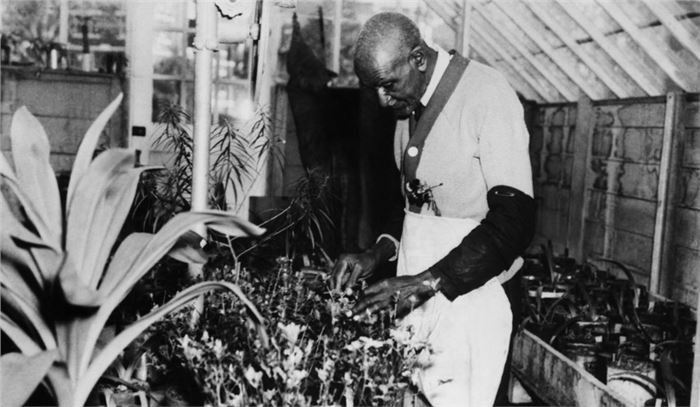 George Washington Carver with plants. Courtesy of Tuskegee University and the California African American Museum.
Of the remaining environmental exhibitions on view currently, a fascinating show that is especially timely during Black History Month and includes previously unpublished material on the subject is World Without End: The George Washington Carver Project. The show will take place until March 2 at the California African American Museum. A Black scientist, inventor, and pioneer of plant-based engineering, Carver’s legacy extends far beyond his groundbreaking agricultural discoveries (including the Jesup Wagon and 325 ways to use the peanut), making him a key figure in modern conservationism. As a trained artist, he used sustainable materials like clay dyes in his weavings and paintings. His rarely seen artworks, along with old paint samples and laboratory equipment, depict a creative genius who paved the way for others – which is why his work is shown alongside contemporary artists, scientists, and engineers whose work builds upon his interests and ideas.
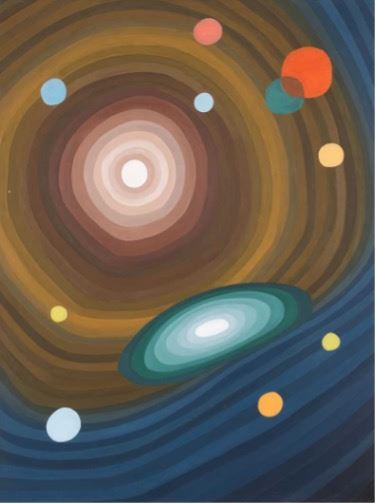
Oskar Fischinger, Space Abstraction No. 3, 1966, oil on canvas. Courtesy of Palm Springs Art Museum.
Further south, at the Palm Springs Art Museum, the show Particles and Waves: Southern California Abstraction and Science is on view until February 24. This exhibition is grounded in scientific inquiry, exploring how artists in Southern California were influenced by theoretical physics, mathematical theories, industrial manufacturing, and diverse materials available in the postwar era. Covering the years 1945-1900, the show includes artists like Man Ray, Lee Mullican, James Turrell, and Bettina Brendel. For a south-of-LA show that bridges the past and present, Blue Gold: The Art and Science of Indigo is on view until March 16 at the Mingei International Museum in San Diego. The show explores indigo’s rich history, from its beauty and cultural significance to its ties to colonialism, slavery, labor exploitation, and environmental degradation. The exhibition examines indigo’s roles in botany, chemistry, medicine, ecology, and economics, as well as its ancient properties and powers as a pigment. Contemporary artists like Porfirio Gutiérrez and Laura Kina confront its complex legacy and address technological innovations in production.
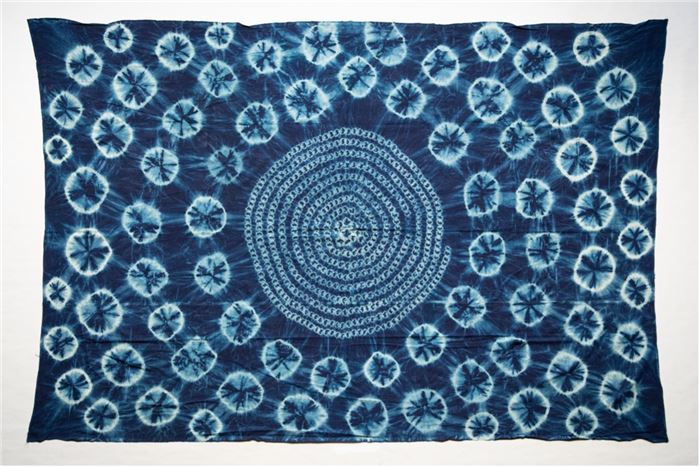 Artist unknown, from Nigeria, Yoruba people. Prestige Cloth Wrapper, ca. 20th century, cotton and indigo. Courtesy of the Mingei International Museum.
Some exhibitions around LA will continue years after the alleged end date. Through September, A Veiled Gazelle at the Museum of Jurassic Technology will offer an immersive look at the art and architecture of the al-Andalus region, and Mark Dion will continue to exhibit Excavations at the La Brea Tar Pits. After a couple of other exhibitions close out 2025, the show Cyberpunk at the Academy Museum of Motion Pictures will run through spring, and Future Imaginaries: Indigenous Art, Fashion, Technology at the Autry Museum of the American West will close that June. As for Pacific Standard Universe, the 23-minute film shown at the Griffith Observatory is said to continue until September 2030. PST ART has been a focal point of Southern California in recent months, but luckily, there’s still plenty to be a part of when it “ends” this week.
For more on auctions, exhibitions, and current trends, visit our Magazine Page