


Current exhibitions
Taubman Museum of Art</a> is pleased to present the <a target="_blank" href=https://www.mutualart.com/Organization/Taubman-Museum-of-Art/"/Artist/Alphonse-Mucha/C5C2A2AB139DC2C6">work of Alphonse Mucha</a>, the groundbreaking artist who originated Art Nouveau, in the new special ticketed exhibition Eternally New: The Art Nouveau World of Alphonse Mucha.</p><p>The exhibition features nearly 50 original posters, books, lithographs, sculptures, and other decorative items on loan from the Virginia Museum of Fine Arts in Richmond, with additional period pieces from other regional collections, including a penny-farthing bicycle, couture dresses, and jewelry.</p><p>Art Nouveau, or “new art,” is an international style of art and architecture that exploded in Paris at the turn of the 20th-century as Czech-born Mucha rose to prominence. His work came to define the look of the fin-de-siècle: soft pastels, sinuous floral patterns, and elegant yet bohemian women such as the internationally renowned French actress Sarah Bernhardt – in short, the essence of Belle Époque.</p><p>Mucha’s work transcends this period, however, with his impact felt throughout the decades in works ranging from the Grateful Dead’s concert posters and the “Flower Power” movement of the 1960’s to manga comics, street artists, and even tattoo art today.Several of these latter-day artists will be included through videos and large-scale images, highlighting how Mucha’s work influenced their own.</p><p>Bringing Mucha’s Art Nouveau world to life in a deeply engaging way is an accompanying Immersive Art Experience from the Grand Palais in Paris. The Taubman Museum of Art is the first museum outside of Europe to showcase the Immersive, kicking off an American tour.</p><p>Featuring sight, sound, smell, and touch, the Immersive walks visitors through the story of Mucha and his humanist ambition in three acts: as a master of advertising in Paris; at a turning point in his career in 1900, which he was heavily involved in the Exposition Universelle in Paris; and through the presentation of his monumental works, namely the Slav Epic, which develops a vision of Slav history as a pacifist model for the world that resonates today more than ever.</p><p><br></p>" />

Oct 24,2024
- Mar 16,2025
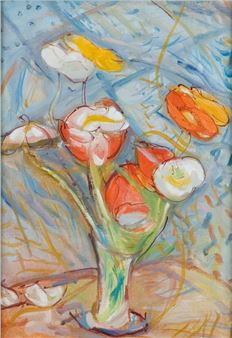
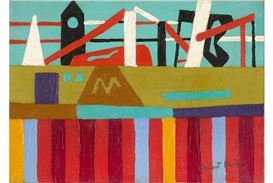
American artist Pierre Daura</a>’s practice with a focus on his still lifes and his interest in abstraction.</p><p>Born in 1896 on the island of Menorca, Daura was a Catalan-American artist who painted in both Europe and America. Daura met his wife, Louise Heron Blair, in Paris in 1927. A Richmond, Virginia, native, she was studying art with Daura in Paris at the time; they married just a year later. In late 1929, Daura became involved in the founding of Cercle et Carré (“Circle and Square”), an artist’s group that had a large impact on his continued focus on abstraction. The Daura family relocated to Virginia in the 1940s, retreating from war-torn Europe. In Virginia, Daura taught art, first at Lynchburg College, where he chaired the art department, and then at Randolph-Macon Women’s College (later Randolph College). Daura died on January 1, 1976, and was buried alongside his wife in Rockbridge Baths, Virginia.</p><p>In 2003, the artist’s daughter, Martha Randolph Daura, generously gifted the <a target="_blank" href=https://www.mutualart.com/Organization/Taubman-Museum-of-Art/"/Organization/Taubman-Museum-of-Art/4B5D047DE3D7D01E">Taubman Museum of Art</a> a large collection of works by her father including watercolor and oil paintings of portraits, French and Virginian landscapes, and still lifes.</p><p><br></p>" />
Upcoming exhibitions
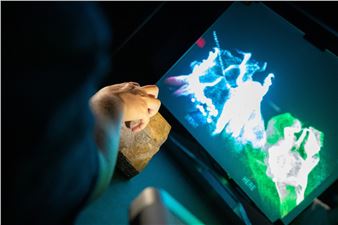
Taubman Museum of Art</a> is pleased to be one of four locations to present the findings of the ICAT research in this immersive art installation.</p><p><br></p>" />
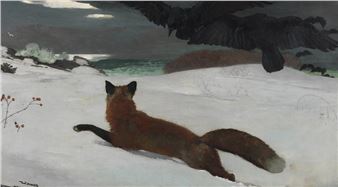
Charles Willson Peale</a> and <a target="_blank" href=https://www.mutualart.com/Organization/Taubman-Museum-of-Art/"/Artist/William-Rush/DFF0CFDACCA93DC4">sculptor William Rush</a> founded PAFA in 1805 to champion American art and artists.</p><p>Making American Artists features works from PAFA’s esteemed collection that helped define new chapters in the history of American art. Amidst this expansive selection emerge the compelling stories of underrepresented artists who found unparalleled support and inspiration at PAFA, including <a target="_blank" href=https://www.mutualart.com/Organization/Taubman-Museum-of-Art/"/Artist/Mary-Cassatt/E4FA27F77ED2BA5F">Mary Cassatt</a>, <a target="_blank" href=https://www.mutualart.com/Organization/Taubman-Museum-of-Art/"/Artist/Barkley-Hendricks/2E59BF2A0A0B9402">Barkley L. Hendricks</a>, <a target="_blank" href=https://www.mutualart.com/Organization/Taubman-Museum-of-Art/"/Artist/Edward-Hopper/87616BDCD5E1A53F">Edward Hopper</a>, <a target="_blank" href=https://www.mutualart.com/Organization/Taubman-Museum-of-Art/"/Artist/Alice-Neel/B9A5DFA4A752CC86">Alice Neel</a>, Georgia O’Keeffe, <a target="_blank" href=https://www.mutualart.com/Organization/Taubman-Museum-of-Art/"/Artist/Laura-Wheeler-Waring/30BB13C0179FAB41">Laura Wheeler Waring</a>, and <a target="_blank" href=https://www.mutualart.com/Organization/Taubman-Museum-of-Art/"/Artist/Sonja-Sekula/45F76B7F5DAE4CE7">Sonia Sekula</a>.</p><p><br></p>" />
Articles
July 13, 2023
Nicholas Taubman, a businessman who grew up in Roanoke, Virginia, served as U.S. Ambassador to Romania from 2005 to 2008.
June 17, 2022
The Taubman Museum of Art is presenting Treasures of American Art: The Cynthia & Heywood Fralin Collection, on view now through Sept. 4, 2022.
