Lineages: Korean Art at The Met

Nov 07, 2023 - Oct 20, 2024

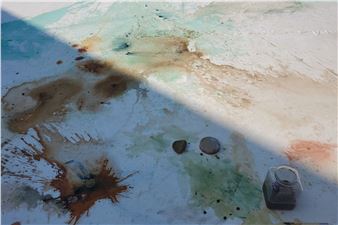
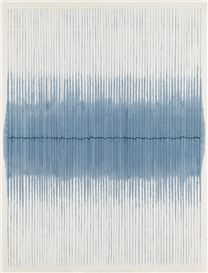
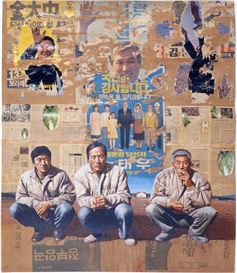
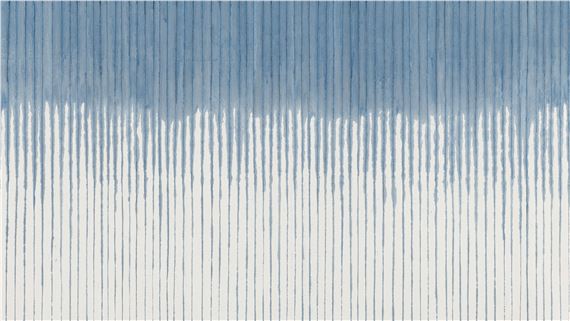
In celebration of the twenty-fifth anniversary of The Met’s Arts of Korea gallery, Lineages: Korean Art at The Met showcases highlights of the Museum’s collection paired with important international loans of Korean modern and contemporary art. This juxtaposition of historic and contemporary artworks—from twelfth- and thirteenth-century celadons to futuristic cyborg sculptures made in the 2000s—displays the history of Korean art in broad strokes through four intertwined themes—lines, people, places, and things. Featuring thirty objects, this exhibition fosters a dialogue of ideas that have resonated across time and bound artists together.


In celebration of the twenty-fifth anniversary of The Met’s Arts of Korea gallery, Lineages: Korean Art at The Met showcases highlights of the Museum’s collection paired with important international loans of Korean modern and contemporary art. This juxtaposition of historic and contemporary artworks—from twelfth- and thirteenth-century celadons to futuristic cyborg sculptures made in the 2000s—displays the history of Korean art in broad strokes through four intertwined themes—lines, people, places, and things. Featuring thirty objects, this exhibition fosters a dialogue of ideas that have resonated across time and bound artists together.


Contact details

Sunday
9:30 AM - 5:30 PM
Tuesday - Thursday
9:30 AM - 5:30 PM
Friday - Saturday
9:30 AM - 9:00 PM
1000 Fifth Avenue Upper East Side - New York, NY, USA 10028-0198

Related articles

NY Met Exhibition to Mark 25th Anniversary of Korean Gallery
“Lineages” at The Met Explores Present-Day Korean Culture by Tapping into the Past

What's on nearby

Twombly. The presentation opens on January 23, 2025, across two floors of the galleries at 980 Madison Avenue. Organized in association with the Cy Twombly Foundation, it includes key bodies of work from 1968 through 1990, including pieces that have never been shown before and loans from the Twombly family.</p><p>The installation on the sixth floor features a series of paintings that Twombly made from 1968 through 1971, representing a more austere approach than do the canvases of the prior decade. Produced during the era of Minimalism and Conceptual art, these canvases have often been interpreted as “blackboards”—their gestural flux breaking down distinctions between painting, drawing, and writing.</p><p>One work from 1968 features nested loops that cascade down and across the canvas. Inscriptions and numbers give the work a diagrammatic quality, while its dynamic composition recalls Leonardo da Vinci’s Deluge drawings (c. 1517–18). An untitled painting of nine panels from 1971 forms a sequence linked by accumulated diagonals and curves.</p><p>The installation on the fifth floor includes a series of verdant green paintings that Twombly made in Bassano in Teverina, Italy, from 1981 through 1986. Marking the artist’s exploration of color and the liquidity of paint, these layered, atmospheric works abstract elemental meetings of water, earth, and air. A group of these paintings is rendered on barbed quatrefoil panels, their format, palette, and evocation of landscapes echoing Rococo art.</p><p>Condottiero Testa di Cozzo (1987) refers to Titian’s portrait of the Grand Duke of Alba (c. 1570) with vibrant passages that paraphrase the Renaissance commander’s red sash, ruffled collar, and black armor. Twombly’s emblematic treatment of natural forms is furthered in a series of vibrant floral abstractions from the Souvenir of D’Arros series (1990), while a sculpture from 1983 exemplifies his engagement with materiality and gesture in three dimensions.</p><p>Five Day Wait at Jiayuguan (1980) is a suite of works on paper first exhibited at the 39th Biennale di Venezia and publicly reunited here for the first time in over forty years. Made in Rome, it was inspired by Twombly’s travels the previous year through Russia, Afghanistan, and Central Asia, and is titled after the city in northwestern China, on the edge of the Gobi Desert. Through gestural forms and poetic inscriptions, these works evoke observations of life, history, and culture in the desert landscape.</p><p>The exhibition is accompanied by two Gagosian publications: an illustrated two-volume catalogue featuring essays by Suzanne Hudson and Jenny Saville, and a facsimile of the artist’s book of Five Day Wait at Jiayuguan, originally published by Gabriele Stocchi in 1981 for the Biennale di Venezia presentation.</p><p><br></p>" />
Marcos Kueh</a>'s colorful, flourescent tapestries crtically address the theme of exoticization and tourism, particularly on the island of Borneo, where Kueh was born and where identity and culture are commodified as touristic entertainment. <a target="_blank" href=https://www.mutualart.com/Exhibition/Lineages--Korean-Art-at-The-Met/"/Artist/Yoko-Ono/988F4E9CCA4E00B6">Yoko Ono</a>'s ongoing interactive art installation, Wish Tree, begun in 1996, makes its way to Asia Society. Visitors are invited to write a wish on a paper tag and tie it to the tree. With Colored Vase, 2008, Ai <a target="_blank" href=https://www.mutualart.com/Exhibition/Lineages--Korean-Art-at-The-Met/"/Artist/Wei-Wei/29E10374C83A6709">Wei Wei</a> asks us to confront our values in relation to the past.</p><p><br></p>" />
Map View
Sign in to MutualArt.com