A Collection in Two Acts

Jul 16, 2022 - Sep 16, 2022

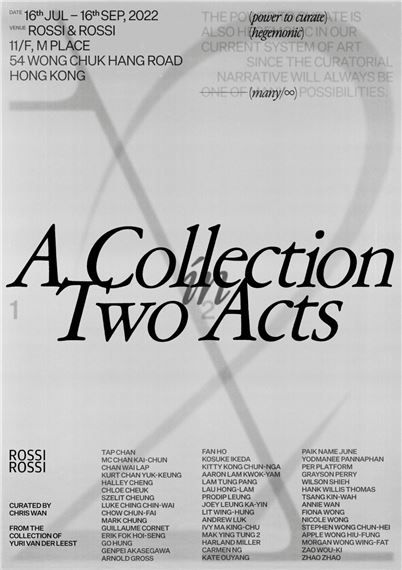
A Collection in Two Acts opens on July 16 through September 16 at Rossi & Rossi Hong Kong. Curated by Chris Wan, the exhibition utilises the private collection of Yuri van der Leest to present two frameworks of collectorship: one is institutional, such as museums and archives — treating artworks as files to be dealt with under a given context of art history; the other is personal, like a private collection built with artworks as repositories of memories and personal encounters. Through the use of critical fabulation, the two modes of art collecting are juxtaposed to raise a question about the structure and agency in the art system. ‍

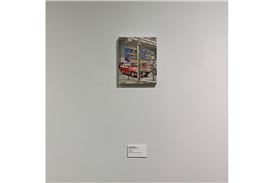
Critical fabulation, coined by Saidiya Hartman in her essay Venus in Two Acts, means a semi-fictional and semi-true fabulated narrative. Drawing reference from this concept, Collection in Two Acts fabulates two art-collecting subjects by dividing the gallery into two exhibition halls, and displaying artworks collected by van der Leest over the past seven years in two disparate formats. The display of Hall 1 invokes a sense of public organisations, where art is collected for exhibition, educational, and research purposes to offer narratives about the past and present. Exhibits are aligned with their finishing date, each with their annotation — however, in addition to rigidly formatted information about titles and medium, artists’ own writings are included in the published material. By introducing the human component to the documentation of art, artists are given more autonomy to how their works are archived. The current method of documentation is thus questioned: has the power of institutions superseded the individual? Who is the subject in history?

Hall 2, on the other hand, depicts a private collection with subjective and personal inclination. The ostensibly arbitrary and unmethodical arrangement of works implies the intimacy of a living space. Congruent to the display style, the collector’s presence is reinforced with texts by van der Leest, written in response to the works clustered around. With these first-person accounts detailing his experiences with his collection, visitors find a passage into the consciousness of a collector. It is the layers of consideration that draw a difference between art collection and hoarding, and if no evaluation is made beyond the act of buying, the practice of collecting is only a reflection of personal taste and instinct.

A Collection in Two Acts opens on July 16 through September 16 at Rossi & Rossi Hong Kong. Curated by Chris Wan, the exhibition utilises the private collection of Yuri van der Leest to present two frameworks of collectorship: one is institutional, such as museums and archives — treating artworks as files to be dealt with under a given context of art history; the other is personal, like a private collection built with artworks as repositories of memories and personal encounters. Through the use of critical fabulation, the two modes of art collecting are juxtaposed to raise a question about the structure and agency in the art system. ‍

Critical fabulation, coined by Saidiya Hartman in her essay Venus in Two Acts, means a semi-fictional and semi-true fabulated narrative. Drawing reference from this concept, Collection in Two Acts fabulates two art-collecting subjects by dividing the gallery into two exhibition halls, and displaying artworks collected by van der Leest over the past seven years in two disparate formats. The display of Hall 1 invokes a sense of public organisations, where art is collected for exhibition, educational, and research purposes to offer narratives about the past and present. Exhibits are aligned with their finishing date, each with their annotation — however, in addition to rigidly formatted information about titles and medium, artists’ own writings are included in the published material. By introducing the human component to the documentation of art, artists are given more autonomy to how their works are archived. The current method of documentation is thus questioned: has the power of institutions superseded the individual? Who is the subject in history?

Hall 2, on the other hand, depicts a private collection with subjective and personal inclination. The ostensibly arbitrary and unmethodical arrangement of works implies the intimacy of a living space. Congruent to the display style, the collector’s presence is reinforced with texts by van der Leest, written in response to the works clustered around. With these first-person accounts detailing his experiences with his collection, visitors find a passage into the consciousness of a collector. It is the layers of consideration that draw a difference between art collection and hoarding, and if no evaluation is made beyond the act of buying, the practice of collecting is only a reflection of personal taste and instinct.


Contact details

11F, M Place, 54 Wong Chuk Hang Road Wong Chuk Hang, Hong Kong

Related articles

Rossi & Rossi Presents 'A Collection in Two Acts' Curated by Chris Wan, from the Collection of Yuri van der Leest

What's on nearby

Blindspot Gallery</a> is pleased to present <a target="_blank" href=https://www.mutualart.com/Exhibition/A-Collection-in-Two-Acts/"/Artist/Chen-Wei/6CAB9E1A60D75414">Chen Wei</a>’s second solo exhibition with the gallery, “Breath of Silence”, on view from February 18 to April 5, 2025, presenting his recent body of works encompassing photography, LED light sculptures and video. Chen is known for his staged photography capturing cinematic scenes suspended in a fragmented time space, these scenes are meticulously constructed in his studio. Muted and often vacant, these charged compositions are allegorical of the psyche of contemporary milieu. His LED sculptures and video installations further transpose in three dimensionality the urban textures and motifs photographed on lens.</p><p><br></p>" />
Alessandro Giannì</a>, with his new corpus of works, invites the public to explore this unstable territory, where the visible and the invisible intertwine in a continuous dialogue. As philosopher Maurice Merleau-Ponty stated, "We never see the world as a given, but as a field of possibilities."</p><p>The title of the exhibition, "Multiple Unrealities," is inspired by a painting from 2018 and introduces a series of works conceived between 2024 and 2025. Here, Giannì interrogates the very nature of the image, deconstructed and reworked through a creative process that enhances the evocative power of fragments. The subjects of his canvases are extracted from diverse contexts and stripped of their original meaning: sacred images, details from masterpieces of the past, or elements from his previous works. Torn from their context, these fragments transform into floating bodies, beings suspended between recognition and abstraction, memory and reinvention. This operation is not merely an act of removal but a rewriting of visual language that invites the viewer to reconsider their relationship with the image. In this sense, Giannì aligns himself with the practice of artists such as Gerhard Richter, who, through his use of "blurr," suggests that the truth of the image is intrinsically linked to its subjective perception.</p><p>Giannì's painting is never the result of a rational process; it instead feeds on intuitions that take shape through gesture. Each brushstroke becomes an act of evocation, an attempt to capture the ephemeral and the transcendent. For the artist, the image represents the meeting point between thought and matter, where the tangible confronts the evanescent. His painting practice thus becomes an archaeology of the visual, a journey through epochs and languages in which the digital and the organic merge, generating unprecedented and evocative scenarios.</p><p>"Multiple Unrealities" presents itself as the other side of the coin of Giannì's previous solo exhibition in Asia, "Breaking Darkness," held in 2023 at Tang Contemporary Art Bangkok. While in "Breaking Darkness" the artist explored the survival of the image over time through the fragment, "Multiple Unrealities" shifts the inquiry toward the unknown side of perception. Here, the dissolution of the image is not an act of denial but an acceptance of disintegration as an integral part of a creative process. The works in this new exhibition not only acknowledge the weight of memory but celebrate it, recomposing the past into ever-new forms, suspended between vision and introspection.</p><p><br></p>" />
Meldibekov (b. 1964), who has been making works that serve as metaphors for the ever shifting geopolitics of the region since the early 1990s. The Point Becomes a Circle, and Time Turns into a Ball in a Curved Space, the artist’s fourth solo exhibition at Rossi &amp; Rossi Hong Kong, will take place on the 8th of February 2025, showcasing a brand new body of works from the past five years. In them, Meldibekov returns to the visual foundations of his oeuvre, namely the point and the circle, as symbols to expound the art history and its contemporary discourse of the steppes in his native Kazakhstan.</p><p>For Meldibekov, a point, on the one hand, can be a geographical or topographical marking; it can also represent a location on a map or an event on the historical mapping of a place. In Karl Marx Peak and Friedrich Engels Peak (2024), for instance, the artist examines the changes in the toponym of several points on a map – the peaks of the Tien Shan, Alatau and Pamir mountains of Central Asia. Since the nineteenth century, these natural sites have undergone a series of renamings to adapt to the shifts in political power and ideology in the region, from nomadic societies, tsarist Russia and the former Soviet Union to today’s nation-states. The work consists of several aluminium basins and pots whose surfaces the artist hammered and drilled to resemble topographical maps. On them, he engraved points, lines and numbers with the names of the three peaks and their elevation marks. The result is a summary of all the past and existing names that these same mountain peaks have assumed, an imaginary chart on which time and space coalesce into a chimerical landscape.</p><p>The artist considers a circle, on the other hand, to be a flattened, crushed point, a metaphor for the cyclical nature of Central Asia’s historical events and the fate of their participants. This is well illustrated in Unmasking the Avant-Garde Artist (2024), where Meldibekov turns his attention to the unrealised Turkestan avant-garde of the early twentieth century. Also known as ‘the eastern wing of the Russian avant-garde’, the movement included a group of Russian artists who were significantly influenced by modernist art and ideas. For various reasons, they found themselves in cities such as Tashkent, Samarkand and Ashgabat in the 1910s and ’20s, often as instructors in art schools. Prominent amongst them was Alexander Volkov (1886–1957), who had a marked impact on the art scene in Uzbekistan. Volkov made his name with his radical geometric paintings inspired by Primitivism, Suprematism and Cubism. However, since the release of ‘On the restructuring of literary and artistic organisations’, a Soviet decree dictating the latest desirable trends and formats in arts and literature, he had been forced to roll back his artistic experiments and reformat his art in the style of Socialist Realism. Volkov’s transition to figurativeness took place gradually, from frame to frame, painting to painting. Meldibekov, in his signature maverick rebellion, decided to liberate Volkov’s paintings from their realist mimicry by applying a layer of white primer to selected areas of his own replicas of the artist’s works. In doing so, he obscures the figures in the late Volkov’s paintings and restores them to their modernist abstraction.</p><p>Fast-forward to the 1990s, when Kazakhstan first established its statehood following the fall of the former Soviet Union: a new, if not self-claimed, national hero emerged in the form of Nursultan Nazarbayev, the country’s first president. From 2011 to 2018, a six-episode epic film based on his biography was produced to cast the politician in the light of The Chosen One for the newly independent country of Kazakhstan. Iconography from religious art and popular culture abounds in the film, which was executed in a style merging the old Soviet cinema of the 1960s with soap operas from the 1990s. It therefore elevated Nazarbayev almost into the pantheon of gods and deities on Mount Olympus. Meldibekov was amused. With his iconic sarcasm, he created an installation of movie posters titled Posthistory (2021–22). Playing with the words ‘poster’ and ‘history’ – ironically connecting them with the sociological concept of ‘post-history’ – the work is composed of ten posters borrowing from various frames of the film. In one example, the former president’s figure acquires monumentality, as he was literally lifted off the ground during his visit to the Kaaba in Mecca, recalling the theme of the Ascension in European art. Soon after the release of the film’s last episode, a large-scale uprising erupted in Kazakhstan with its main slogan, ‘Shal, ket!’ (‘Get out of here, Old Man!’). Indeed, out went the Old Man into his political heaven, for good.</p><p><br></p>" />
Map View
Sign in to MutualArt.com